Get Ready for japinymusic.com!
Welcome to japinymusic.com!
In the bustling, chaotic, and sonically rich landscape of Nairobi, a quiet revolution has been taking place. While the mainstream charts often pulse with the familiar rhythms of Gengetone, Afropop, and R&B, a different sound has been cultivated in the intimate corners of high-end hotels and on international digital streaming platforms.
This is the world of Japiny, an Afro-fusion singer who represents a unique archetype in the Kenyan music industry: the artist who built an international career from the ground up, prioritizing global accessibility over local radio dominance.
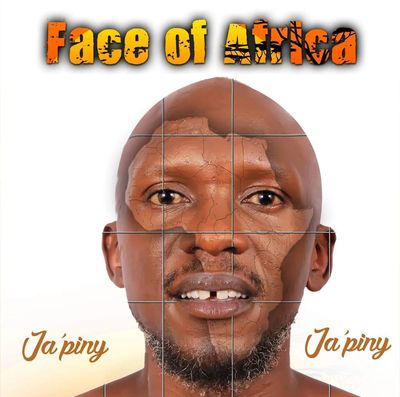
To understand Japiny is to understand the term "Afro-fusion." In his case, it is not merely a buzzword but a lived musical philosophy. His work, as showcased in his album Face of Africa, suggests a blend that is both deeply rooted in East African melodic structures and open to the harmonic influences of jazz, soul, and perhaps even the rhythmic complexities found in other parts of the African diaspora.
.jpeg/:/cr=t:0%25,l:0%25,w:100%25,h:100%25/rs=w:400,cg:true)
The Sound of 'Face of Africa' and the Global Stage
Welcome to japinymusic.com
His journey is notably different from that of many of his peers. While the conversation in Kenya during the late 2010s centered on the "70% local content" policy—a push to force radio stations to play more Kenyan music—Japiny had already looked beyond the borders for his audience . By 2019, he was already a "full-time artiste who earns his living through music," a feat many musicians in the region struggle to achieve. His strategy was not reliant on radio spins but on a direct-to-fan model that many Western indie artists employ: consistent live performances and digital distribution.
Japiny performs regularly with his band, Kivuli band, securing residencies at high-end venues Nairobi . These gigs are not just performances; they are the economic engine of his career, allowing him the financial freedom to record and release music without the pressure of a major label.
Furthermore, he was an early adopter of platforms like iTunes, Spotify, Amazon, and Deezer at a time when many Kenyan artists were still relying solely on local radio and YouTube views . This forward-thinking approach allowed him to cultivate a following among global listeners who might be searching for "East African acoustic music" or "African jazz," placing his music directly in the international marketplace.

About japinymusic.com

Our Story
The release of his album Face of Africa serves as a key artifact for understanding his artistic vision . Although specific track listings from the search results are limited, the album title itself is a bold statement of intent. For an artist who has spent significant energy building an international profile, "Face of Africa" is likely an attempt to present a specific image of the continent—one that is sophisticated, modern, and sonically diverse.
Discover the Magic of japinymusic.com
Discover the World with japinymusic.com!
One of the accessible tracks from his repertoire is a song titled Dunia (a Swahili word meaning "world" or "earth"). While the search results do not detail the specific instrumentation of the track, the name suggests themes of life, struggle, or the human experience—common threads in East African music. For an Afro-fusion artist, a song like Dunia would typically serve as a canvas to merge traditional Kenyan instruments (such as the nyatiti or orutu) with modern studio production, or to layer Swahili lyrics over jazz-influenced chord progressions.
It is useful to consider Japiny’s approach within the broader context of "fusion" music globally. In Japan, for instance, there is a tradition of blending local sounds with foreign genres; bands like Ajate explicitly use traditional Japanese taiko drums and shinobue flutes to create music inspired by West African Afrobeat and Ghanaian dance rhythms .
Similarly, Japanese artists like Fujii Kaze seamlessly blend R&B, soul, and traditional Japanese pentatonic scales to create a sound that is distinctly Japanese yet universally pop . Japiny operates in a similar creative space but from a Kenyan perspective. He is taking the "soul" of East Africa—its languages, its storytelling traditions, its melodic phrasing—and packaging it in a musical format (jazz-infused Afrobeat) that is easily digestible to an international audience.
His presence on platforms like Spotify is crucial here. Unlike the "Japoni" music of Helmand, Afghanistan, which relies on physical instruments like a motorcycle-wire stringed instrument played in village dark rooms , Japiny’s music is designed for the digital age. It is clean, accessible, and readily available alongside global jazz and world music playlists. This strategy positions him not just as a "Kenyan artist," but as a "world music" artist who happens to be Kenyan.

Welcome to japinymusic.com!
Welcome to japinymusic.com
Perhaps the most significant aspect of Japiny’s career is the business model he represents. In an industry often characterized by a reliance on a few major labels or "disc jockey" (DJ) promotions to break records, Japiny has charted a path of self-sufficiency that serves as a blueprint for upcoming artists.
Consistent Live Performance: By maintaining a residency at venues like Explorer Tervan, he has created a steady income stream . In the service-based economy of Nairobi’s hospitality industry, an artist who can reliably draw a crowd of expatriates and discerning locals is invaluable. This setup allows him to refine his band’s performance—the Kivuli band—to a high standard, turning their live show into a polished product.
Digital Distribution: By utilizing platforms like iTunes and Spotify, Japiny bypasses the bottleneck of traditional radio . While local radio airplay remains a marker of success in Kenya, it is no longer the only marker. For an artist like Japiny, whose sound is more aligned with acoustic sophistication than high-energy club bangers, streaming platforms offer a direct line to listeners who actively seek out his genre of music.
Brand Autonomy: Japiny has built a recognizable brand. The combination of his unique name (often confused with "Japan" or the Afghan "Japoni," but distinctly his own), his consistent visual identity, and his band creates a cohesive product. He is not waiting for a label to "discover" him; he has built a career where he controls his masters, his bookings, and his release schedule.
In the context of East African music history, Japiny follows in the footsteps of artists like Suzanna Owíyo, who achieved significant international acclaim (including performing for Nelson Mandela) before receiving widespread local recognition . He represents the quiet, professional artist archetype—one who prioritizes longevity over viral fame.
As the Kenyan music industry continues to evolve, with a focus on monetization and export, the path Japiny has carved out becomes increasingly relevant. While he may not dominate the radio charts, his presence in high-end hotels and on international playlists proves that there is a viable, respectable, and profitable way to be a musician in East Africa without sacrificing artistic integrity for commercial trends. He is, in many ways, the face of a new kind of African artist: globalized, self-managed, and consistently working.